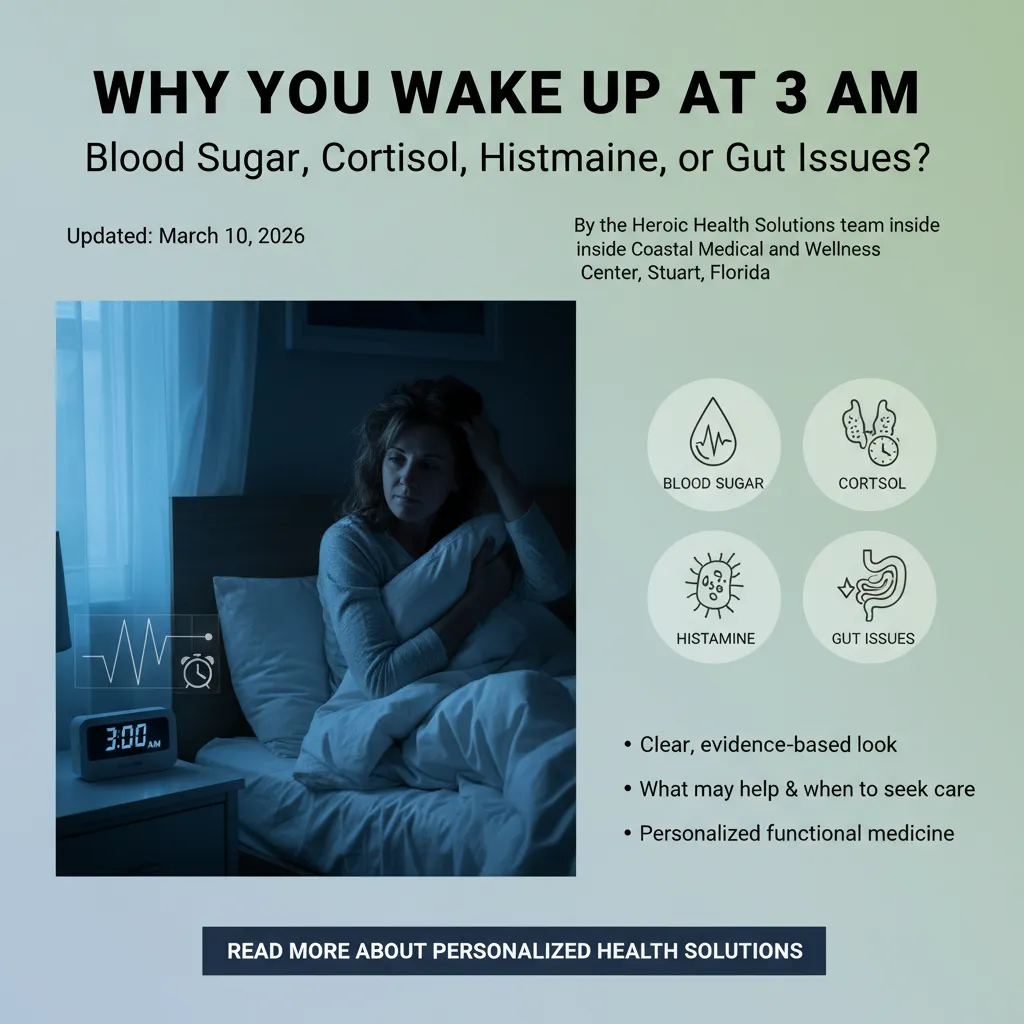
Why You Wake Up at 3 AM: Blood Sugar, Cortisol, Histamine, or Gut Issues?
Why You Wake Up at 3 AM: Blood Sugar, Cortisol, Histamine, or Gut Issues?
Updated: March 10, 2026
By the Heroic Health Solutions team inside Coastal Medical and Wellness Center, Stuart, Florida
If you’re wondering, “Why do I keep waking up at 3 AM even when I’m exhausted?” you’re not overthinking it. Night waking can happen for many reasons, and it is not always “just stress” or “just aging.”
What this post covers: A clear, evidence-based look at common reasons people wake up around 3 AM, what may help, when to seek care, and what a personalized functional medicine evaluation may look like in Stuart, FL.
Direct answer: Waking up at 3 AM can be related to blood sugar swings, stress-hormone patterns, histamine activity, reflux or other gut issues, sleep habits, alcohol, medications, or underlying medical conditions. The goal is not to guess one cause from the internet, but to look at patterns, symptoms, and health history so care can be more personalized.
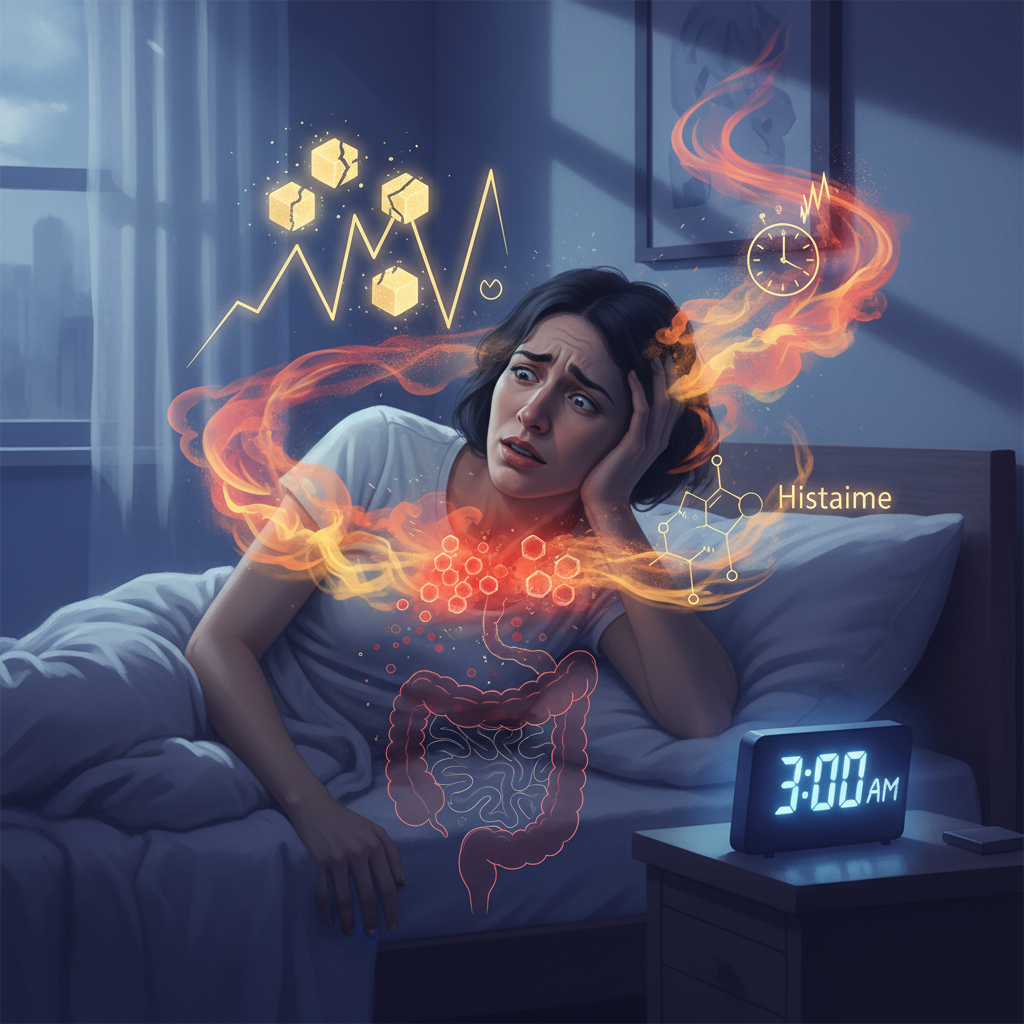
At Heroic Health Solutions, the functional medicine practice operating inside Coastal Medical and Wellness Center, the focus is on understanding why symptoms may be happening, not simply masking them. That means looking at sleep, stress physiology, digestion, nutrition patterns, health history, and lifestyle context together. You can learn more about the clinic’s approach at Heroic Health Solutions.
Why do some people wake up at 3 AM?
A 3 AM wake-up is not one diagnosis. It is a pattern.
Common contributors can include:
blood sugar drops or instability overnight
stress and cortisol rhythm disruption
histamine activity in some sensitive individuals
reflux, bloating, or other digestive discomfort
alcohol, caffeine, late meals, or irregular sleep timing
sleep apnea, anxiety, pain, or other medical issues
Research from the National Institute on Aging and Mayo Clinic shows that sleep disruption can have many overlapping causes. That is why a personalized review matters.
Myth vs Fact: What causes waking up at 3 AM?
Myth 1: “If I wake up at 3 AM, it must be cortisol.”
Fact: Cortisol may play a role, but it is not the only possibility.
Stress physiology matters, especially if you feel “tired but wired,” have racing thoughts, or notice poor stress tolerance during the day. But similar night waking can also happen with blood sugar swings, reflux, alcohol use, histamine-related symptoms, or inconsistent sleep routines. A root-cause evaluation looks at the whole pattern instead of assuming one answer.
Myth 2: “It’s always low blood sugar.”
Fact: Overnight blood sugar changes can contribute, but they do not explain every case.
Some people notice they wake suddenly, feel hot, shaky, restless, or hungry. For others, blood sugar may not be the main driver at all. The CDC and broader sleep literature support that metabolic health and sleep are closely connected, but context matters. The goal is to understand whether food timing, meal balance, insulin resistance, stress, or another issue may be affecting sleep.
Myth 3: “Histamine only causes hives or allergies.”
Fact: Histamine can affect more than sinuses and skin.
Histamine also acts as a signaling molecule in the body and brain. In some people, patterns may include flushing, headaches, itching, nasal congestion, palpitations, digestive symptoms, or feeling alert at the wrong time of night. That does not mean every person who wakes at 3 AM has a histamine issue. It means histamine may be one clue when night waking occurs alongside other symptoms.
Myth 4: “If I fall asleep fine, my gut can’t be involved.”
Fact: Gut issues can show up after you fall asleep.
Reflux, bloating, changes in bowel habits, abdominal discomfort, and food reactions can disrupt sleep later in the night. The gut-brain connection is real, and poor digestion can affect sleep quality. The NIH and sleep research consistently support the connection between digestive health, inflammation, and sleep regulation.
Myth 5: “Functional medicine is just supplements.”
Fact: A good functional medicine approach is broader than that.
At Heroic Health Solutions, the emphasis is on health history, lifestyle patterns, systems-based assessment, and personalized planning. That may include sleep habits, meal timing, stress load, movement, environmental triggers, and appropriate testing used in broad, clinically relevant ways. It is about pattern recognition and shared decision-making, not one-size-fits-all protocols. See the clinic philosophy at heroichealthsolutions.com.
Myth 6: “Testing always gives a clear answer.”
Fact: Testing can be helpful, but it works best when guided by symptoms and clinical context.
The purpose of testing is to add information, not replace clinical judgment. Broadly, clinicians may use standard medical labs or other assessments to look for patterns related to metabolism, inflammation, nutrient status, thyroid function, digestion, or other factors. Results are used to guide care thoughtfully, not to overpromise certainty.
How do I know if this is for me?
A functional medicine approach may be worth exploring if you are waking at 3 AM and also dealing with patterns like:
daytime fatigue or brain fog
feeling “wired but tired”
cravings, crashes, or irritability
bloating, reflux, constipation, or loose stools
headaches, flushing, congestion, or food reactions
trouble staying asleep even when you are exhausted
a sense that something is off, despite being told basic labs are “normal”
This is not about self-diagnosing blood sugar, cortisol, histamine, or gut dysfunction from one article. It is about noticing patterns and deciding whether a more personalized evaluation makes sense.
For readers in Stuart, Palm City, Jensen Beach, Port St. Lucie, and nearby communities, Heroic Health Solutions offers that root-cause lens within Coastal Medical and Wellness Center.
What typically helps, and what usually does not?
Short answer: Consistency tends to help more than “hacks.”
What may help
Regular sleep timing: Going to bed and waking up at similar times supports circadian rhythm.
Balanced evening meals: Large swings in intake, heavy late meals, or drinking alcohol close to bed may worsen sleep for some people.
Stress downshifting: Gentle wind-down routines, lower evening stimulation, and realistic workload boundaries can matter.
Daytime light and movement: Morning light exposure and regular physical activity often support better sleep regulation.
Symptom tracking: Notice whether night waking lines up with stress, late eating, alcohol, travel, digestive symptoms, or menstrual cycle changes.
What often does not help
chasing random internet theories
changing too many things at once
relying on stimulants to push through poor sleep
assuming one symptom always equals one diagnosis
self-prescribing complex protocols without clinician guidance
If you are considering treatment options, talk to your clinician. Therapeutic choices should match your health history, risks, goals, and monitoring needs.
What can you expect at Coastal Medical and Wellness Center in Stuart, FL?
Short answer: Expect a personalized, systems-based conversation rather than a rushed visit.**

At Coastal Medical and Wellness Center, Heroic Health Solutions functions as the clinic’s functional medicine practice, using the same team, same location, and same phone number: 772-286-5277.
A typical process may include:
A detailed intake
Your clinician reviews symptoms, timeline, sleep pattern, digestion, stress, nutrition, health history, and goals.A personalized assessment
Instead of assuming one cause, the visit looks for patterns across systems.Testing when appropriate
Broad testing may be used to look for issues related to metabolism, inflammation, thyroid function, or other contributors. The purpose is to guide care, not label everything as one problem.Shared decision-making
Your plan is customized to your priorities and comfort level. That may include lifestyle changes, coaching, monitoring, and coordination with other parts of your care.Follow-up and refinement
Functional medicine is often a process. Plans are adjusted based on response, not just theory.
This is where the clinic’s personalized, high-touch “Disney-Wow” service matters. People want to feel heard, not handled. The experience is designed to be thoughtful, respectful, and practical.
You may also want to explore related content on sleep and functional medicine and the clinic’s broader care philosophy.
When should you seek urgent care?
Most 3 AM waking is not an emergency. But some symptoms should not wait.
Seek urgent or emergency care right away if you have:
stroke symptoms
sudden severe headache
loss of bladder/bowel control
saddle anesthesia
fever with back pain
currently undergoing cancer treatment and have concerning new symptoms
severe shortness of breath
If your symptoms feel severe, rapidly worsening, or unsafe, seek emergency evaluation.
FAQ: Voice-search friendly answers
Why do I keep waking up at 3 AM every night?
Common reasons include stress-hormone disruption, blood sugar swings, digestive issues, sleep habits, alcohol, medication effects, or medical conditions such as sleep apnea. The repeated pattern matters more than the exact clock time.
Can blood sugar make you wake up in the middle of the night?
Yes, it can in some people. Overnight glucose changes may contribute to restlessness, sudden waking, sweating, or feeling alert at odd hours, especially when paired with daytime energy crashes or metabolic concerns.
Can histamine cause insomnia or night waking?
It can in some cases. Histamine is involved in wakefulness and may be relevant if night waking happens along with flushing, itching, headaches, congestion, or certain food-triggered symptoms.
Can gut issues wake you up at 3 AM?
Yes. Reflux, bloating, abdominal discomfort, food reactions, and other digestive symptoms can disturb sleep after you initially fall asleep.
What is the first thing I should look at if I keep waking up at night?
Start with patterns: meal timing, alcohol, caffeine, stress, late exercise, screen exposure, snoring, digestive symptoms, and whether you feel hot, hungry, anxious, or uncomfortable when you wake.
Is functional medicine helpful for insomnia?
It may be helpful when sleep issues appear connected to bigger patterns involving stress, digestion, blood sugar, inflammation, or lifestyle factors. It is not a replacement for emergency care or evaluation of serious sleep disorders.
What does the evidence say about insomnia treatment?
The American College of Physicians recommends cognitive behavioral therapy for insomnia as an initial treatment for chronic insomnia in many adults. That does not rule out looking for underlying contributors; it supports using evidence-based first principles while also evaluating root causes.
When should I talk to a clinician about waking up at 3 AM?
Talk to a clinician if it happens often, affects your functioning, comes with snoring, palpitations, digestive symptoms, anxiety, or daytime fatigue, or if you feel like your health is gradually narrowing your life.
Related reading and citations
Heroic Health Solutions: https://heroichealthsolutions.com/
Mayo Clinic, Insomnia overview: https://www.mayoclinic.org/diseases-conditions/insomnia/symptoms-causes/syc-20355167
National Institute on Aging, Sleep and aging: https://www.nia.nih.gov/health/sleep/aging-and-sleep
CDC, About diabetes: https://www.cdc.gov/diabetes/about/index.html
American College of Physicians guideline on chronic insomnia: https://www.acpjournals.org/doi/10.7326/M15-2175
Key takeaways
Waking up at 3 AM is common, but it is not always random. Blood sugar, cortisol rhythm, histamine activity, gut issues, and lifestyle patterns can all play a role. The right next step is usually not guessing harder. It is getting a thoughtful, personalized look at the full picture.

Call 772-286-5277 to schedule a consult or visit.
Heroic Health Solutions is the functional medicine practice operating inside Coastal Medical and Wellness Center at the clinic’s Stuart, Florida location; same team, same phone.
Medical disclaimer: This article is for informational purposes only and is not medical advice. It is not intended to diagnose, treat, or replace personalized care from a qualified clinician. If you have urgent or severe symptoms, seek emergency care.
