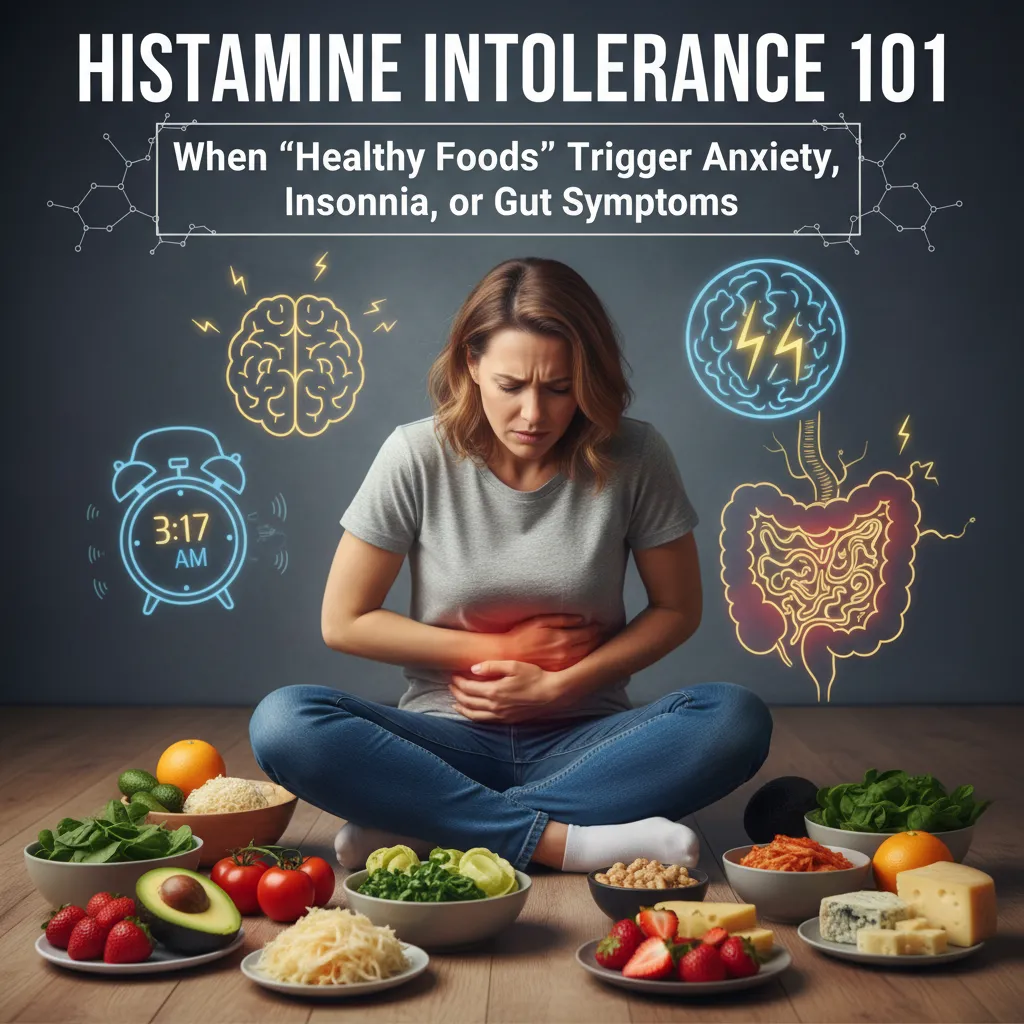
Histamine Intolerance 101: When “Healthy Foods” Trigger Anxiety, Insomnia, or Gut Symptoms
Histamine Intolerance 101: When “Healthy Foods” Trigger Anxiety, Insomnia, or Gut Symptoms
February 25, 2026
If you're wondering why certain "healthy" foods leave you feeling inexplicably anxious, sleepless, or struggling with gut issues, you're not alone. Many people experience a complex set of symptoms that can be traced back to an imbalance in their body's histamine response, often mistakenly attributed to other causes.
What this post covers: This article explores histamine intolerance, explaining how it can manifest through various symptoms, why a functional medicine approach is crucial for understanding its root causes, and how Heroic Health Solutions, operating within Coastal Medical and Wellness Center in Stuart, FL, helps patients navigate this challenging condition.

Myth vs. Fact: Understanding Histamine Intolerance and Functional Medicine
Histamine intolerance is a condition where the body accumulates too much histamine, a chemical involved in immune responses, digestion, and neurotransmission. When the body can't break down histamine effectively, symptoms can arise that mimic allergies or other conditions. This often leads to confusion and frustration for individuals seeking answers.
Myth 1: Histamine intolerance is a food allergy.
Fact: While symptoms can overlap with food allergies, histamine intolerance is not an allergic reaction. A food allergy involves an immune response to specific proteins in food, leading to the production of IgE antibodies. Histamine intolerance, however, is generally due to a deficiency or reduced activity of the enzymes responsible for breaking down histamine in the body, primarily diamine oxidase (DAO) in the gut. When histamine builds up, it can trigger a wide range of symptoms.
Myth 2: If a food is "healthy," it can't be causing my symptoms.
Fact: Many seemingly healthy foods, such as fermented products (sauerkraut, kombucha), aged cheeses, spinach, tomatoes, and even leftovers, can be high in histamine. For individuals with histamine intolerance, consuming these foods can exacerbate symptoms. The problem isn't the inherent healthiness of the food, but rather the body's impaired ability to process its histamine content. This is a common source of frustration for those trying to eat well but still feeling unwell.
Myth 3: Histamine intolerance is rare and not a real medical condition.
Fact: While not as widely recognized as some other conditions, histamine intolerance is increasingly understood as a legitimate issue affecting many individuals. Research continues to shed light on its mechanisms and prevalence. Symptoms can be diverse, ranging from digestive issues like bloating and diarrhea to skin rashes, headaches, nasal congestion, and even anxiety or insomnia. The American Academy of Allergy, Asthma & Immunology (AAAAI) recognizes histamine as a critical mediator in allergic reactions and other bodily functions. [1]
Myth 4: I can just take an antihistamine and my problems will go away.
Fact: While over-the-counter antihistamines can provide temporary relief for some symptoms, they do not address the underlying cause of histamine intolerance. Functional medicine focuses on identifying why your body isn't processing histamine effectively. This could involve investigating gut health, enzyme deficiencies, nutrient imbalances, or other systemic issues. Simply masking symptoms with medication often delays finding a sustainable solution. At Heroic Health Solutions, we prioritize understanding the "why" behind your symptoms to develop a more effective and lasting approach. You can learn more about our personalized approach to care on our Functional Medicine page.
Myth 5: Testing always gives clear answers for histamine intolerance.
Fact: Diagnosing histamine intolerance can be complex. There isn't one single definitive test. A comprehensive approach often involves a detailed medical history, symptom tracking, and sometimes specific laboratory assessments, such as evaluating DAO enzyme activity or assessing histamine levels. However, these tests are part of a larger diagnostic picture, and results are interpreted in conjunction with your unique symptoms and overall health profile. It's a process of careful detective work.
Myth 6: Functional medicine is just about supplements.
Fact: While appropriate supplementation may be part of a functional medicine plan, it's far from the only tool. Our approach at Heroic Health Solutions emphasizes foundational lifestyle interventions, including nutrition, stress management, sleep optimization, and movement. We believe in empowering patients with the knowledge and tools to support their body's natural healing capabilities. Supplements are considered only when targeted support is needed and always discussed in the context of your overall health plan with your clinician. We focus on getting to the root cause, not just adding another pill. Discover our philosophy on personalized health on our About Us page.
How Do I Know If This Is For Me?
If you experience a combination of persistent symptoms that seem to defy conventional diagnosis, particularly if they worsen after consuming certain foods, histamine intolerance might be a factor. Common indicators include:
Digestive issues: Bloating, gas, diarrhea, constipation, abdominal pain, nausea.
Skin problems: Hives, rashes, eczema, flushing.
Headaches/Migraines: Persistent or triggered by food.
Respiratory symptoms: Nasal congestion, runny nose, sneezing, asthma-like symptoms.
Neurological symptoms: Anxiety, panic attacks, insomnia, brain fog, dizziness.
Cardiovascular symptoms: Heart palpitations, low blood pressure.
Other: Fatigue, menstrual cycle irregularities, itching.
A functional medicine approach is particularly beneficial for individuals who are seeking a deeper understanding of their health challenges, are open to making lifestyle changes, and desire a personalized care plan rather than a one-size-fits-all solution. It's about finding the underlying imbalances that contribute to your symptoms.
What Typically Helps (and What Doesn’t)
Addressing histamine intolerance effectively typically involves a multi-faceted approach focusing on restoring balance within the body.
What typically helps:
Careful Dietary Modulation: Working with a clinician to identify and temporarily reduce high-histamine foods can be a crucial first step. The goal isn't necessarily lifelong avoidance, but rather to calm the system and then strategically reintroduce foods to determine individual tolerance. This is a personalized process.
Gut Health Optimization: Since the majority of DAO enzyme production occurs in the gut, supporting a healthy gut microbiome and gut lining is paramount. This can involve tailored nutritional strategies and addressing dysbiosis (imbalance of gut bacteria).
Stress Management: Chronic stress can impact various bodily systems, including digestive function and immune response, potentially exacerbating histamine-related symptoms. Techniques like mindfulness, deep breathing, and adequate rest are important.
Adequate Sleep: Quality sleep is fundamental for overall health and the body's ability to repair and restore itself, which can influence histamine regulation.
Targeted Support (Discuss with your clinician): In some cases, specific nutrients or compounds may be discussed with your clinician to support DAO enzyme activity or help manage histamine levels. These are always considered within the context of your individualized care plan.
What doesn't help (and can sometimes worsen symptoms):
Randomly eliminating foods: Without proper guidance, indiscriminately cutting out foods can lead to nutritional deficiencies and unnecessary dietary restrictions.
Ignoring other health issues: Histamine intolerance can be intertwined with other conditions. Overlooking these co-existing issues can hinder progress.
Expecting quick fixes: Functional medicine is a journey towards healing and rebalancing, not an overnight solution. Patience and consistency are key.

What to Expect at Coastal Medical and Wellness Center (Stuart, FL)
At Heroic Health Solutions, located inside Coastal Medical and Wellness Center in Stuart, FL, we offer a comprehensive, personalized approach to understanding and addressing complex conditions like histamine intolerance. We believe in providing "Disney-Wow" patient service, ensuring you feel heard, understood, and supported throughout your health journey.
Our process typically includes:
Thorough Intake and Health History: Your journey begins with an in-depth review of your medical history, lifestyle, and symptoms. We take the time to listen to your story, understanding that your unique experiences are critical to uncovering the root causes of your health concerns.
Personalized Assessment: We utilize a systems-based approach, looking at the interconnectedness of your body's systems. This helps us identify potential imbalances contributing to your histamine intolerance.
Advanced Functional Testing (Broadly Defined): Depending on your individual needs, we may recommend specific functional lab assessments. These tests are used to provide insights into areas such as gut health, nutrient status, enzyme function, and inflammation. The purpose of these tests is to gather data that informs your personalized care plan, not to provide a definitive diagnosis in isolation.
Shared Decision-Making: We believe in empowering you as an active participant in your health. Based on your history, symptoms, and test results, we will discuss a range of therapeutic options. This collaborative process ensures your care plan aligns with your values and goals.
Customized Care Plan: Your personalized plan may incorporate dietary modifications, targeted lifestyle interventions (sleep hygiene, stress reduction techniques, movement), and other modalities aimed at restoring balance and supporting your body's natural histamine regulation.
Ongoing Support and Follow-Up: Health is a journey, not a destination. We provide ongoing support, monitoring your progress and making adjustments to your plan as needed. Our team at Coastal Medical and Wellness Center is dedicated to guiding you every step of the way, fostering lasting health improvements.
Heroic Health Solutions is the functional medicine practice operating inside Coastal Medical and Wellness Center at our Stuart, FL location; same team, same phone: 772‑286‑5277. We are dedicated to serving our community, including patients from Jensen Beach, Palm City, Port St. Lucie, and the wider Martin and St. Lucie County areas, with our unique, root-cause approach.
When to Seek Urgent Care
While we focus on chronic health and preventative care, it's crucial to know when to seek immediate medical attention. If you experience any of the following symptoms, please go to the nearest emergency room or call 911 immediately:
Stroke symptoms (e.g., sudden weakness or numbness on one side of the body, sudden vision changes, sudden severe headache, difficulty speaking)
Sudden severe headache
Loss of bladder or bowel control
Saddle anesthesia (numbness in the groin or inner thighs)
Fever with back pain
Currently undergoing cancer treatment with new or worsening symptoms
Severe shortness of breath or difficulty breathing

Frequently Asked Questions About Histamine Intolerance
What is histamine intolerance?
Histamine intolerance occurs when your body accumulates too much histamine, often because it can't break it down efficiently. This excess histamine can lead to a wide range of symptoms affecting various body systems.
What causes histamine intolerance?
It's primarily caused by a deficiency or reduced activity of enzymes, like diamine oxidase (DAO), that are responsible for breaking down histamine in the gut. Factors like gut dysbiosis, certain medications, and genetic predispositions can contribute to this enzyme deficiency.
Can diet help with histamine intolerance?
Yes, a low-histamine diet, carefully managed under the guidance of a clinician, can help reduce the body's histamine load and alleviate symptoms. However, it's a temporary measure and part of a broader strategy to address underlying causes.
How is histamine intolerance diagnosed?
There's no single definitive test. Diagnosis typically involves a detailed medical history, symptom tracking, and sometimes laboratory tests to assess DAO enzyme activity or histamine levels, interpreted by a clinician.
Is histamine intolerance the same as an allergy?
No, histamine intolerance is not an allergy. Allergies involve an immune system reaction, whereas histamine intolerance is a metabolic issue related to the body's ability to process histamine.
Can histamine intolerance cause anxiety or insomnia?
Yes, histamine acts as a neurotransmitter and can influence brain function. Elevated histamine levels have been linked to symptoms like anxiety, irritability, and sleep disturbances, including insomnia.
What role does gut health play in histamine intolerance?
Gut health is critical because the majority of the DAO enzyme, which breaks down dietary histamine, is produced in the gut. An unhealthy gut microbiome or compromised gut lining can impair DAO function and contribute to histamine buildup. [2]
Conclusion
Understanding histamine intolerance can be a significant step toward reclaiming your health. At Heroic Health Solutions, operating within Coastal Medical and Wellness Center in Stuart, FL, we are committed to helping you uncover the root causes of your symptoms with a personalized, evidence-informed functional medicine approach. We aim to equip you with the knowledge and tools to achieve lasting well-being, moving beyond band-aid solutions.
Call 772‑286‑5277 to schedule a consult or visit and begin your journey towards a healthier, more balanced life.
References
American Academy of Allergy, Asthma & Immunology (AAAAI). (n.d.).Histamine. Retrieved from https://www.aaaai.org/(General information on histamine's role in the body).
Schnedl, W. J., et al. (2019). Histamine Intolerance and the Role of Diamine Oxidase (DAO): A Review.Diseases, 7(4), 84. Retrieved from https://www.mdpi.com/2077-0383/7/4/84/htm(For information on DAO enzyme and gut health).
WebMD. (n.d.).What to Know About Diamine Oxidase (DAO) for Histamine Intolerance. Retrieved from https://www.webmd.com/allergies/what-to-know-about-diamine-oxidase-histamine-intolerance(General overview of DAO and histamine intolerance).
Medical Disclaimer
This blog post is for informational purposes only and does not constitute medical advice. It is not intended to diagnose, treat, cure, or prevent any disease. Always seek the advice of your physician or other qualified health provider with any questions you may have regarding a medical condition. Do not disregard professional medical advice or delay in seeking it because of something you have read here.
