Bloating Isn’t Always ‘Leaky Gut’: SIBO, Low Stomach Acid, and Bile Flow—How to Tell What’s Driving Your Symptoms
Bloating Isn’t Always ‘Leaky Gut’: SIBO, Low Stomach Acid, and Bile Flow—How to Tell What’s Driving Your Symptoms
If you’re wondering why your belly feels perpetually swollen, gassy, or uncomfortable, even after eating a “healthy” meal, you’re not alone. Many people experience bloating and mistakenly attribute it to a single cause like "leaky gut," when the reality is often much more nuanced.
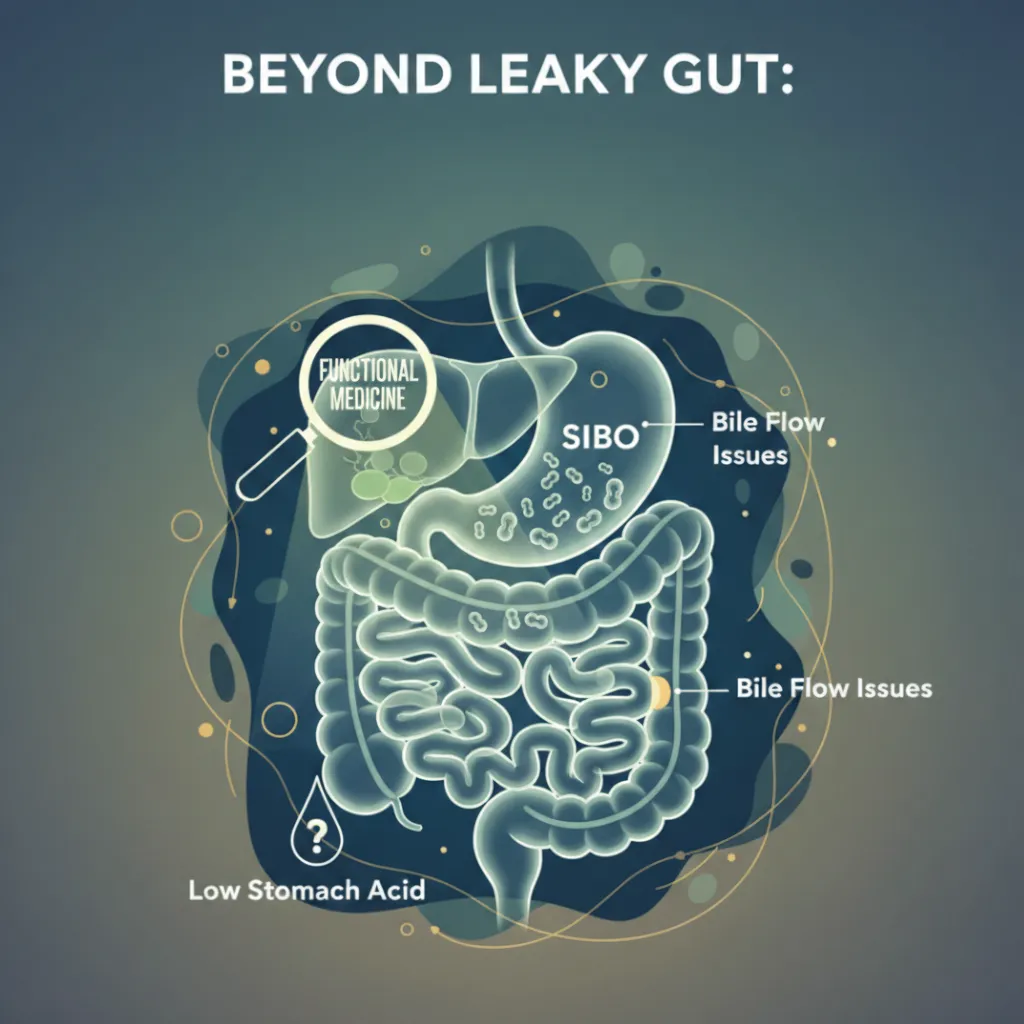
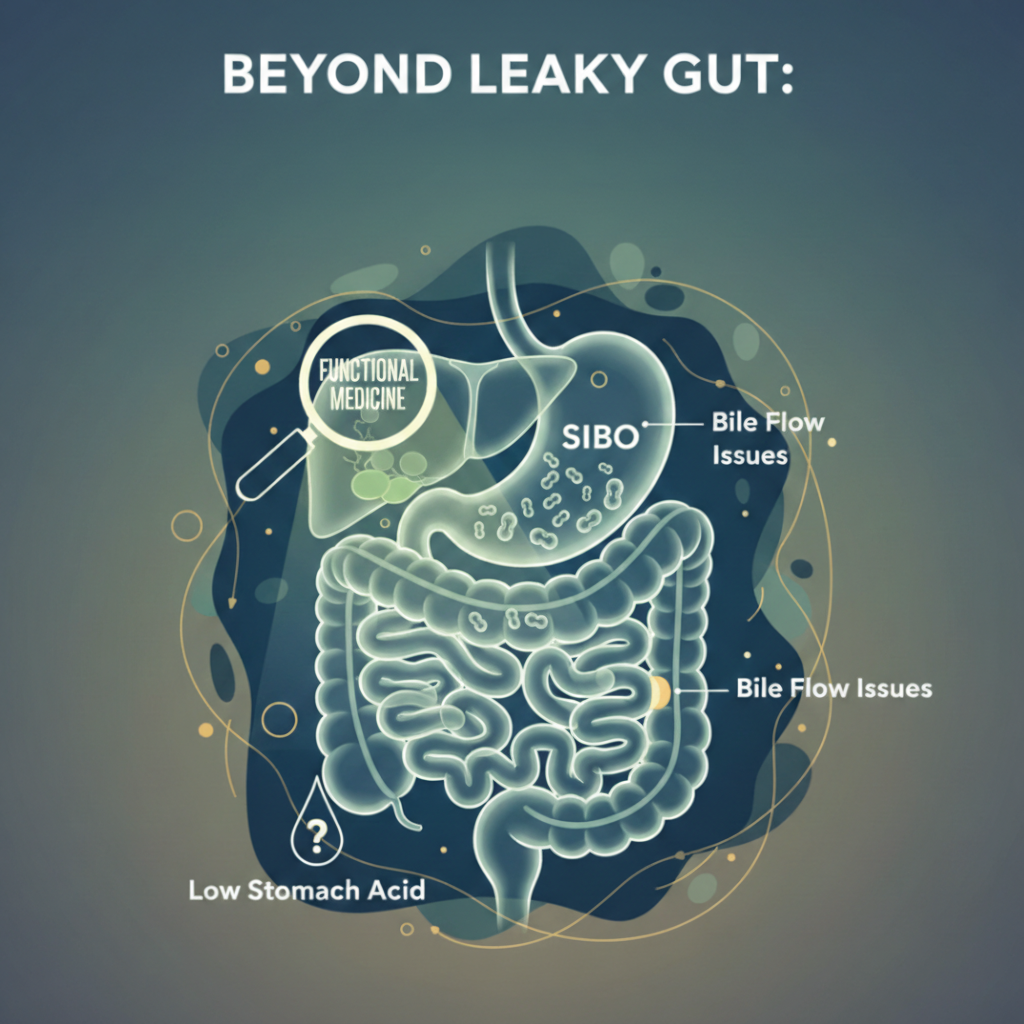
What this post covers: This article explores common root causes of bloating beyond just leaky gut, including Small Intestinal Bacterial Overgrowth (SIBO), low stomach acid, and bile flow issues, and explains how a functional medicine approach can help uncover the specific drivers behind your digestive distress.
The Complex World of Bloating: Beyond a Single Culprit
Bloating is a common digestive complaint, characterized by a feeling of fullness, tightness, or swelling in the abdomen, often accompanied by gas and discomfort. While "leaky gut" (intestinal permeability) can certainly contribute, it's frequently part of a larger picture. Functional medicine seeks to understand this broader context.
Myth vs. Fact: Unpacking Common Digestive Misconceptions
When it comes to digestive health, many beliefs circulate that can hinder effective solutions. Let's separate myth from fact to better understand your body.
Myth 1: Bloating always means you have "leaky gut."
Fact: While intestinal permeability (often referred to as "leaky gut") can contribute to bloating and digestive issues, it's rarely the sole cause. Bloating is a symptom, not a diagnosis, and can stem from a variety of underlying issues, including imbalances in gut bacteria (like SIBO), insufficient digestive enzymes, poor bile flow, or even how you eat. Focusing only on "leaky gut" can lead to incomplete solutions. At Heroic Health Solutions, a practice operating inside Coastal Medical and Wellness Center, we look at the whole system to identify all contributing factors, not just one.
Myth 2: Taking antacids for heartburn will solve my digestive problems.
Fact: While antacids can provide temporary relief from heartburn by reducing stomach acid, persistent use can actually contribute to bloating and other digestive issues in the long run. Stomach acid (hydrochloric acid) is crucial for proper digestion and acts as a barrier against undesirable microbes. Low stomach acid can lead to undigested food, bacterial overgrowth, and nutrient malabsorption, all of which can cause bloating. A functional medicine approach would investigate why you have heartburn in the first place, rather than just suppressing symptoms.
Myth 3: If I just eat more fiber, my digestion will improve.
Fact: Fiber is important for digestive health, but simply adding more fiber isn't always the answer, and can sometimes worsen bloating, especially in cases of SIBO or other dysbiosis. Certain types of fiber can be highly fermentable by bacteria in the small intestine, leading to increased gas and bloating if these bacteria are out of balance. A personalized approach considers the type of fiber, the state of your microbiome, and your body’s specific needs.
Myth 4: All gut bacteria are good, and more probiotics are always better.
Fact: The gut microbiome is incredibly complex, containing trillions of bacteria, fungi, and other microorganisms. While many are beneficial, an overgrowth of certain bacteria, or bacteria in the wrong place (like the small intestine in SIBO), can cause significant problems. Similarly, not all probiotics are suitable for everyone; certain strains or high doses can sometimes exacerbate symptoms in sensitive individuals. Understanding the balance and location of your microbes is key. This is a core tenet of the personalized care offered at Heroic Health Solutions, within Coastal Medical and Wellness Center.
Myth 5: Bloating is just a normal part of getting older or a woman’s cycle.
Fact: While hormonal fluctuations can influence digestive comfort, and digestive efficiency can change with age, persistent, uncomfortable bloating is not something you simply have to accept. It's a signal from your body that something is out of balance. Functional medicine aims to uncover these imbalances and work with you to restore optimal function, regardless of age or gender.

How Do I Know if This Is For Me?
If you experience persistent bloating, gas, abdominal discomfort, changes in bowel habits (constipation or diarrhea), or feel generally unwell after meals, a functional medicine approach could be beneficial. This approach is particularly helpful for individuals who have tried conventional solutions without lasting relief, or who suspect their digestive issues are connected to other seemingly unrelated symptoms like fatigue, skin problems, or mood changes.
We don't diagnose via self-assessment, but if you resonate with any of the following, exploring a root-cause approach might be a good next step:
You've been told your labs are "normal," but you still feel unwell.
You're tired of treating symptoms without understanding why they're happening.
You're looking for personalized strategies that consider your unique physiology and lifestyle.
You're interested in integrating lifestyle, nutrition, and targeted support to restore balance.
What Typically Helps (and What Doesn't)
Addressing persistent bloating often involves a multi-faceted approach, focusing on foundational health and addressing specific imbalances.
What typically helps:
Mindful Eating Practices: Slowing down, chewing food thoroughly, and eating in a relaxed state can significantly improve digestion. When you're stressed, your body diverts resources away from digestion, impacting stomach acid and enzyme production.
Targeted Nutritional Support: While specific diets vary greatly based on individual needs, focusing on whole, unprocessed foods, and identifying potential food sensitivities can be a powerful first step. An elimination diet, guided by a clinician, can sometimes help pinpoint problematic foods.
Stress Management: Chronic stress is a significant contributor to digestive dysfunction. Practices like meditation, deep breathing, yoga, or spending time in nature can positively impact your gut-brain axis.
Adequate Hydration: Drinking enough water throughout the day supports bowel regularity and overall digestive function.
Movement: Regular physical activity can help stimulate gut motility and reduce bloating.
What generally doesn't help (without addressing root causes):
Relying solely on over-the-counter remedies: While these can offer temporary relief, they often mask underlying issues without resolving them.
Blindly adding supplements: Without proper assessment, taking a random array of digestive supplements can sometimes exacerbate symptoms or create new imbalances.
Ignoring lifestyle factors: Diet, stress, sleep, and activity levels are all intricately linked to digestive health. Neglecting these areas makes lasting improvement challenging.
What to Expect at Coastal Medical and Wellness Center (Stuart, FL)
At Heroic Health Solutions, operating within Coastal Medical and Wellness Center in Stuart, Florida, our approach to your digestive health is deeply personalized. We understand that your body tells a unique story, and we are committed to listening and unraveling it. You’ll find us at the same address and phone number: 772‑286‑5277.
Comprehensive Intake: Your journey begins with a thorough review of your health history, lifestyle, and current symptoms. This isn't just about your gut; we explore connections across all body systems. We aim to understand you as a whole person, not just your symptoms.
Personalized Assessment: We utilize advanced functional testing to gain deeper insights into your body's functions. This may include specialized stool tests to evaluate your microbiome and digestive markers, breath tests for SIBO, or organic acid tests to assess metabolic pathways. These tests help us move beyond guesswork. We do not recommend specific lab panels here, but rather discuss the types of tests that can provide valuable information about your unique physiology.
Shared Decision-Making: We believe you are an active partner in your health journey. Based on your comprehensive assessment, we will develop a customized health plan. This plan integrates dietary modifications, lifestyle interventions, and targeted nutrient support, always tailored to your specific needs and goals. We discuss all options with you, ensuring you understand the rationale behind each recommendation.
Ongoing Support and Education: Healing is a process, not a single event. We provide continuous guidance and education, empowering you with the knowledge and tools to maintain your progress. Follow-up appointments allow us to monitor your progress, make necessary adjustments to your plan, and celebrate your improvements. We're here to support residents of Stuart, Jensen Beach, Palm City, Port St. Lucie, and the surrounding areas.
We never promise specific outcomes, but rather commit to providing you with an individualized, root-cause evaluation and comprehensive support within a caring, patient-centered environment. Heroic Health Solutions is the functional medicine practice operating inside Coastal Medical and Wellness Center at 3257 SE Salerno Road, #3 Stuart, Florida 34997; same team, same phone.
When to Seek Urgent Care
While this blog post is for informational purposes, it's crucial to recognize when symptoms require immediate medical attention. If you experience any of the following, please seek urgent medical care right away:
Sudden, severe abdominal pain
Stroke symptoms (facial drooping, arm weakness, speech difficulty)
Sudden severe headache ("worst headache of your life")
Loss of bladder or bowel control
Saddle anesthesia (numbness in the groin or inner thigh)
Fever with severe back pain
Currently undergoing cancer treatment and experiencing new or worsening symptoms
Severe shortness of breath
Frequently Asked Questions About Bloating and Digestive Health
What is SIBO, and how does it cause bloating?
Small Intestinal Bacterial Overgrowth (SIBO) occurs when bacteria, normally found in the large intestine, grow excessively in the small intestine. These bacteria ferment carbohydrates, producing gases like hydrogen and methane, which lead to bloating, abdominal pain, and altered bowel habits.
Can low stomach acid really lead to digestive problems?
Yes, absolutely. Low stomach acid (hypochlorhydria) impairs the initial stages of digestion, particularly protein breakdown, and allows undigested food to pass into the intestines, where it can ferment. It also reduces the body's natural defense against ingested bacteria, contributing to dysbiosis and SIBO.
How does bile flow affect digestion and bloating?
Bile, produced by the liver and stored in the gallbladder, is essential for digesting fats. If bile flow is sluggish or insufficient, fats are not properly broken down, leading to malabsorption, fatty stools, and often contributing to bacterial imbalances and bloating in the gut.
Are there specific foods that commonly trigger bloating?
Many individuals find relief from bloating by temporarily reducing or eliminating certain highly fermentable carbohydrates known as FODMAPs (Fermentable Oligo-, Di-, Mono-saccharides And Polyols). These include some fruits, vegetables, legumes, and dairy products. However, specific triggers vary widely, and a guided elimination approach is often most effective.
What is the Gut-Brain Axis, and how does it relate to bloating?
The Gut-Brain Axis is a bidirectional communication network between your central nervous system and your enteric nervous system (the nervous system of your gut). Stress, anxiety, and mood can significantly impact gut function, motility, and sensitivity, often exacerbating symptoms like bloating and abdominal discomfort. Conversely, gut health can influence mental well-being.
What is the American College of Gastroenterology's stance on diagnosing SIBO?
The American College of Gastroenterology (ACG) recognizes breath testing as a primary diagnostic tool for SIBO, recommending glucose or lactulose breath tests. These tests measure hydrogen and methane gases produced by bacteria in the small intestine after consuming a sugar solution [source: American College of Gastroenterology Clinical Guideline: Small Intestinal Bacterial Overgrowth (2020)].
Key Takeaways
Bloating is a common but complex symptom with multiple potential root causes beyond just "leaky gut." Identifying the specific drivers—such as SIBO, low stomach acid, or bile flow issues—is crucial for effective, lasting relief. A personalized functional medicine approach, like that offered at Heroic Health Solutions within Coastal Medical and Wellness Center, focuses on comprehensive assessment and individualized care plans to address these underlying imbalances.
Call 772‑286‑5277 to schedule a consult or visit with Heroic Health Solutions at Coastal Medical and Wellness Center in Stuart, FL.
References
American College of Gastroenterology. (2020).ACG Clinical Guideline: Small Intestinal Bacterial Overgrowth. Retrieved from https://journals.lww.com/ajg/fulltext/2021/01000/ACG_Clinical_Guideline__Management_of_Irritable.11.aspx(Note: While this refers to IBS, the ACG is a primary source for SIBO guidelines.)
National Institute of Diabetes and Digestive and Kidney Diseases (NIDDK).Bloating and Gas. Retrieved from https://www.niddk.nih.gov/health-information/digestive-diseases/gas-bloating/symptoms-causes
Harvard Health Publishing. (2021).The gut-brain connection. Retrieved from https://www.health.harvard.edu/diseases-and-conditions/the-gut-brain-connection
Heroic Health Solutions. (n.d.).Our Approach. Retrieved from https://heroichealthsolutions.com/our-approach
Heroic Health Solutions. (n.d.).Services. Retrieved from https://heroichealthsolutions.com/services
Medical Disclaimer
This blog post is for informational purposes only and does not constitute medical advice. It is not intended to diagnose, treat, cure, or prevent any disease. Always seek the advice of a qualified healthcare professional for any medical concerns or before making any decisions related to your health or treatment. Do not disregard professional medical advice or delay seeking it because of something you have read in this article.
