Insomnia Isn’t a Mystery—It’s a Signaling Problem: A Functional, Evidence-Informed Approach to Better Sleep
Insomnia Isn’t a Mystery—It’s a Signaling Problem: A Functional, Evidence-Informed Approach to Better Sleep

You’ve likely spent countless hours researching insomnia—sleep hygiene, blue light, cortisol, magnesium, melatonin, glycine, CBT-I, trackers, wearables, HRV scores—trying to find the real lever that moves the needle.
And yet, the pattern keeps repeating: you’re exhausted, but bedtime becomes a negotiation with your own nervous system.
Let’s validate what you already suspect: this isn’t “all in your head.” Poor sleep is a real, physiological signal—often reflecting dysregulation in stress chemistry, mineral status, neurotransmitter balance, inflammation load, and the way your brain is interpreting safety vs. threat at night.
You already understand the problem. The question is: are you ready for a true partnership—one that respects your intelligence and moves from research to implementation?
The Clinical Deep Dive (Unveiling the Root Cause)
Sleep is not a single switch. It’s a coordinated handoff between systems—your brain, adrenals, mitochondria, immune system, and gut signaling—executed through a few key pathways.
The 3 most common functional patterns behind insomnia
1) “Tired but Wired”: Stress-system mis-timing (HPA axis + autonomic imbalance)
Many high-performing, analytical people don’t struggle with sleep because they “don’t try hard enough.” They struggle because the body is running the wrong program at the wrong time.
When the stress response is overactive or poorly timed, the body leans toward:
higher nighttime alertness
faster thoughts
shallow sleep
early waking (especially if blood sugar and stress hormones surge)
This is not a character flaw—it’s biology. Your nervous system is behaving as if nighttime is not safe enough for deep downshift.
2) Neurotransmitter imbalance: Difficulty shifting from “go” to “slow”
Sleep onset and sleep maintenance depend heavily on inhibitory signaling (the “brakes”) balancing excitatory signaling (the “gas pedal”). If the brakes are under-supported—due to chronic stress, nutrient depletion, or inflammation—you can want sleep and still fail to transition.
3) Micronutrient depletion: Minerals are not optional in sleep physiology
Minerals (especially magnesium) are foundational for:
neuromuscular relaxation
healthy stress chemistry
normal excitability thresholds in the brain
Chronic stress increases micronutrient demand. So the more you “push,” the more your body can become depleted—and the more fragile sleep becomes.
Why conventional or generic solutions often fail the Scholar
If you’ve tried “the usual,” you may have discovered the shortcomings:
Single-ingredient thinking: Insomnia is rarely one deficiency and one pill.
Trend formulas vs. physiology: Many products prioritize marketing over mechanism.
Poor synergy: Sleep requires coordinated support—calming the nervous system, supporting inhibitory tone, and addressing stress physiology together.
Symptom suppression without context: Sedation is not the same as restoration. A knocked-out body can still wake up unrefreshed.
You don’t want a sleep “hack.” You want a coherent model—and a tool that matches that model.
The Solution: Understanding the Supplement (CalmGenic)

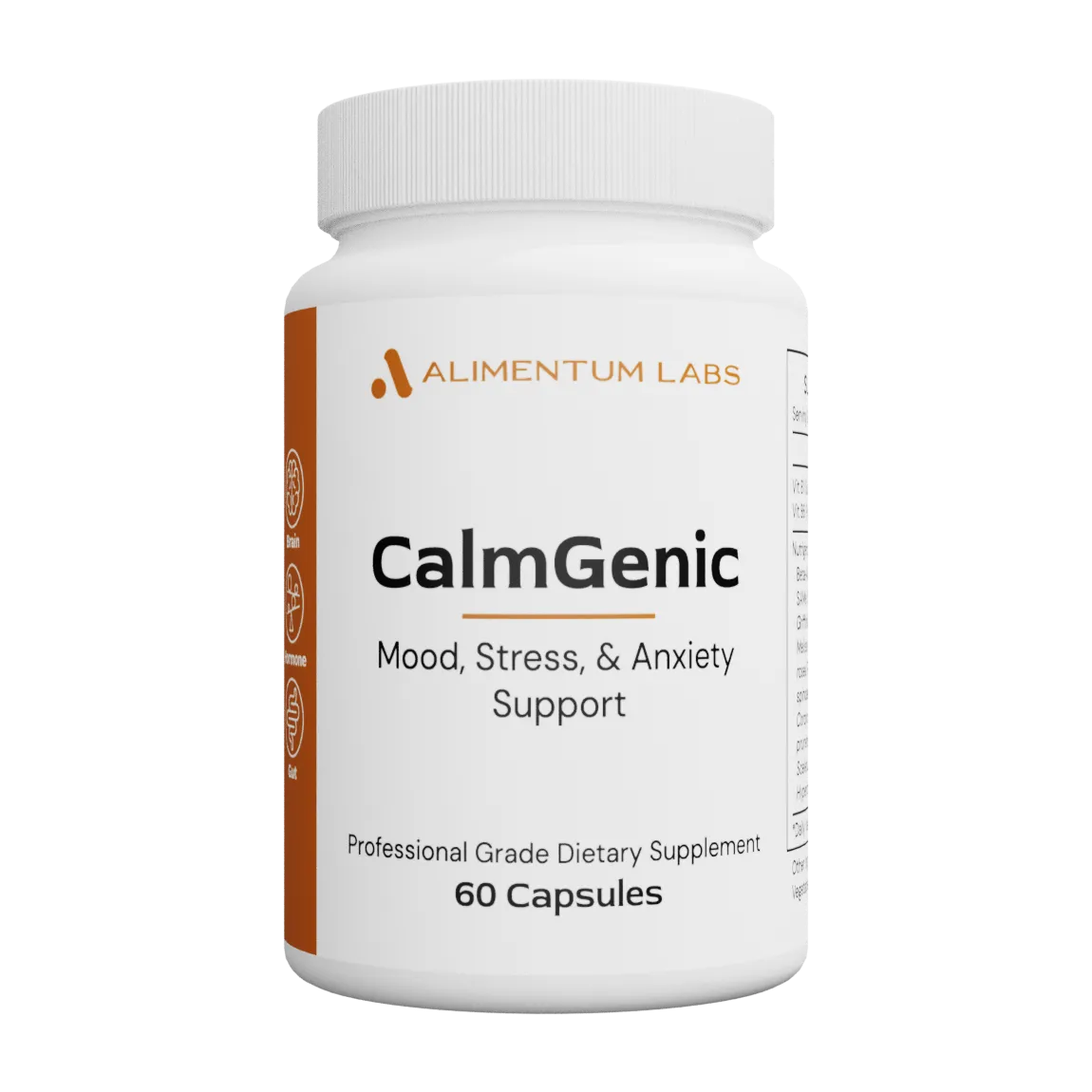
CalmGenic by Systemic Formulas is positioned as a clinical-grade nervous system support formula—built for people who don’t need another trendy gummy, but rather a practitioner-caliber approach that supports the physiology behind calm.👉 https://systemicformulas.com/ref/FLAT02/
How it works (system-level, not just “sleepy vibes”)
While individual responses vary, the intent of a formula like CalmGenic is to support sleep by addressing upstream drivers that keep the system “on,” including:
Nervous system downshifting: Supporting parasympathetic tone so the body can transition into rest.
Stress chemistry modulation: Helping the body respond to stress signals without staying locked in hyperarousal.
Neuromuscular relaxation: Supporting relaxation pathways so the body isn’t tense at bedtime.
Think of it as supporting the conditions that make sleep possible—rather than forcing sedation.
Evidence-informed benefits you’re likely optimizing for
Faster sleep onset by supporting nervous system calming
Less “tired but wired” activation in the evening
Fewer nighttime awakenings by improving physiologic stability
Improved perceived sleep quality(deeper, more restorative nights)
Better next-day resilience(less reactive stress response)
(Important note: supplements support physiology—they don’t replace foundations like light timing, stimulants, blood sugar stability, and nervous system retraining. They’re leverage, not magic.)
Building Trust: The Systemic Formulas Difference (for the Scholar)
When you’re analytically minded, you don’t want “more supplements.” You want the right tool, designed with clinical reasoning.
Systemic Formulas stands out to clinicians and evidence-oriented patients because they are:
Practitioner-exclusive: Designed for outcomes-based clinical use, not mass-market trends.
Physiology-driven formulation: Built around systems support and functional logic rather than isolated ingredients.
Purity + potency standards: A serious consideration for those who care about signal-to-noise.
Bio-Command technology: A core differentiator in their approach—engineered to improve how the body utilizes the formula, appealing to those who care about delivery and response, not just label claims.
This matters: you’re not looking for placebo-level inputs—you’re looking for a clinically-intentional intervention.
You’ve done the research. Now, take the decisive step. Partner with Systemic Formulas for the clinical-grade support your sophisticated biology demands. Explore the solutions here:
https://systemicformulas.com/ref/FLAT02/
If you want to approach sleep like a functional medicine patient—not a supplement hobbyist—start there, and commit to a structured experiment (consistent timing, real tracking, and a clear plan).
